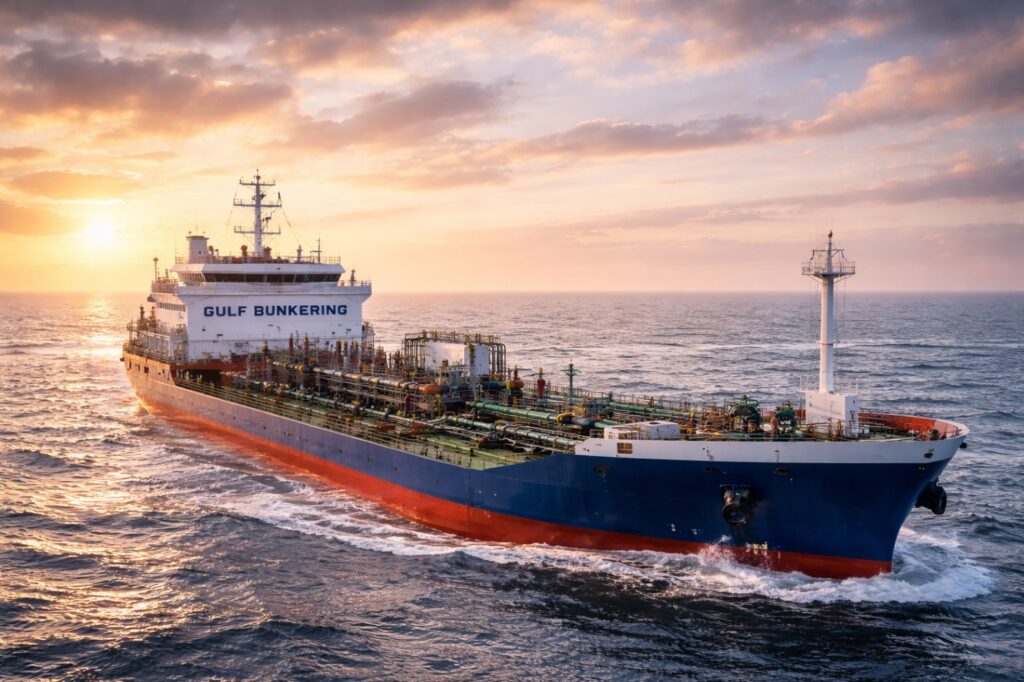
A tanker caught fire at the outer anchorage of Chittagong, Bangladesh, on Thursday morning, prompting a rescue operation that brought all crew members to safety.
According to Ship & Bunker, the vessel involved was the Bangladesh-flagged tanker Meghna Trader. The Bangladesh Coast Guard confirmed the incident via a social media post on Thursday. Local media reports indicate that the fire was brought under control within hours, with all 22 crew members rescued safely.
What We Know About the Vessel and Cargo
AIS data cited by Ship & Bunker shows the Meghna Trader had arrived at the Chittagong outer anchorage on May 26, following a voyage from Indonesia. The tanker was carrying palm oil at the time of the incident. Local media reports suggest that more than half of the cargo had already been discharged before the fire broke out.
The cause of the fire has not been established. Ship & Bunker notes that the origin of the blaze remains unknown at this stage.
Does This Matter to You?
An incident of this nature at a major port anchorage carries potential significance across several parts of the maritime industry. Chittagong is Bangladesh’s primary commercial port and a key hub for regional cargo movements. A fire involving a partially discharged cargo tanker at the outer anchorage raises questions around cargo handling safety, anchorage risk management, and emergency response coordination in busy port approaches.
For those monitoring maritime safety and port operations in the Bay of Bengal region, this incident may prompt closer attention to anchorage protocols and vessel condition assessments prior to discharge operations. The involvement of a palm oil cargo — a commodity regularly transported across Southeast Asia — also underscores the importance of cargo-specific fire risk awareness during loading and discharge phases.
The full circumstances surrounding the fire remain unclear pending any official investigation findings.
Gulf Bunkering does not provide operational or security guidance. This article is for informational purposes only. Operators should consult flag state authorities, P&I clubs, and relevant advisories for decisions relating to transit planning.
Sources: Ship & Bunker