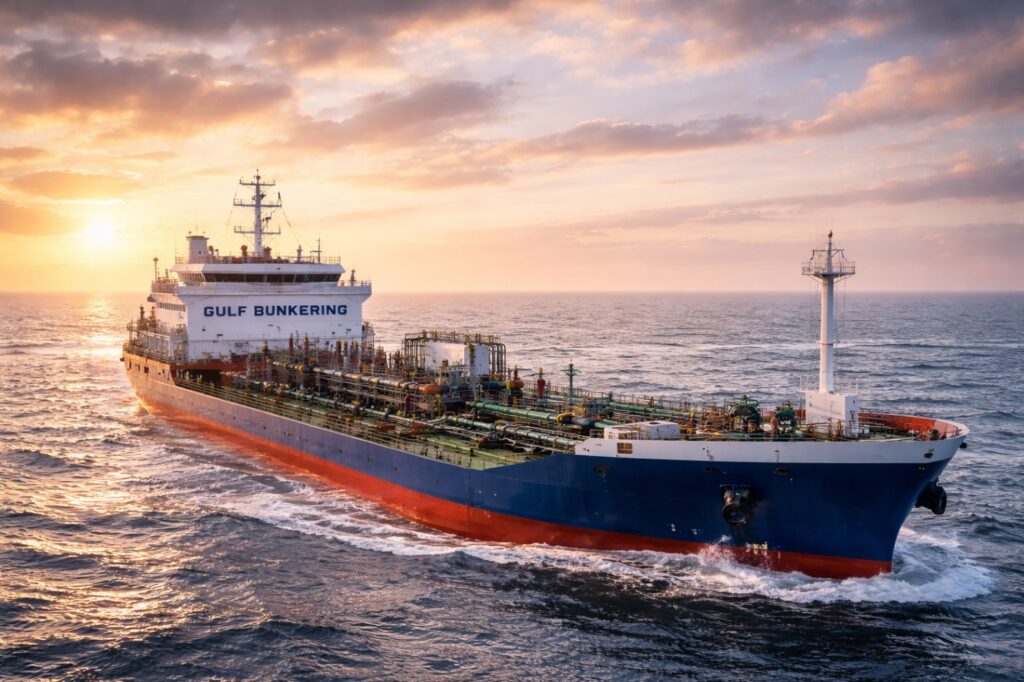
A five-month pilot of Carbon Ridge’s onboard carbon capture system has delivered results that could mark a significant moment for shipping’s decarbonisation efforts, according to a DNV technical evaluation.
Classification society DNV confirmed that the Carbon Ridge onboard carbon capture system (OCCS), installed aboard the 109,999 DWT tanker STI Spiga operated by Scorpio Tankers, achieved CO2 capture rates of up to 98% during normal commercial voyages. As reported by Ship & Bunker, more than half of all recorded results during the trial fell within the 86% to 98% capture range, with peak performance surpassing 98%.
A First for Maritime Carbon Capture
The trial is notable not only for its performance figures but also for what it represents technically. According to Ship & Bunker, this was the first maritime deployment of a centrifugal onboard carbon capture system — a distinction that sets it apart from other OCCS approaches currently under development across the industry.
DNV assessed the results using its own onboard carbon capture assessment guidelines and verified performance under its Recommended Practice framework.
What Was Said
Chase Dwyer, CEO and Founder of Carbon Ridge, stated that the DNV evaluation “validates the capability of Carbon Ridge’s modular centrifugal OCCS technology to significantly reduce the emissions of existing and newbuild vessels.”
Cameron Mackey, COO of Scorpio Tankers, noted that for shipowners anticipating higher carbon prices or stricter regulatory requirements, “Carbon Ridge’s OCCS is an attractive solution.”
Does This Matter to You?
Onboard carbon capture has been gaining attention as a potential compliance pathway, particularly as regulatory pressure on shipping emissions intensifies globally. The ability to retrofit an OCCS onto an existing vessel — while it continues operating commercially — addresses one of the key practical concerns around decarbonisation technology: minimising disruption to revenue-generating operations.
Verified capture rates of this magnitude, confirmed by a recognised classification society under established guidelines, add weight to onboard carbon capture as a credible option rather than a theoretical one. For those monitoring emissions compliance strategies, technology investment decisions, or the evolution of decarbonisation solutions for existing fleets, this trial result is worth tracking.
The companies involved said the outcome demonstrates the broader potential of onboard carbon capture to help vessels reduce their emissions footprint, though further deployment at scale would be needed to draw wider conclusions.
Gulf Bunkering does not provide operational or security guidance. This article is for informational purposes only. Operators should consult flag state authorities, P&I clubs, and relevant advisories for decisions relating to transit planning.
Sources: Ship & Bunker