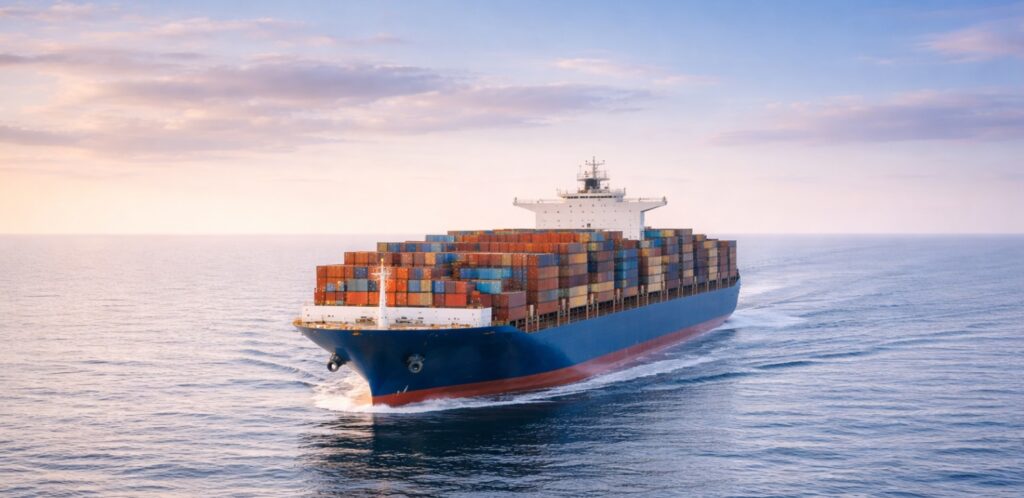
American retailers are accelerating their sourcing timelines, shifting orders from China forward by four to six weeks to ensure shelves are stocked before Black Friday and the Christmas season — and before anticipated tariff increases take hold.
According to Reuters, as reported by ShippingWatch, companies are building up inventories ahead of expected higher US tariffs, driving a wave of front-loading activity that is already pushing freight rates higher and tightening available shipping capacity.
Holiday Stock Rush Reshapes Ocean Freight Demand
The urgency behind this inventory push stems from a familiar pattern: retailers unwilling to risk holiday season shortfalls are locking in goods earlier than usual. With tariff increases expected to raise the cost of imported Chinese goods, the incentive to move product now — rather than later — is clear.
ShippingWatch notes that this shift in ordering behavior is contributing to rising freight rates and reduced availability of shipping capacity on key transpacific lanes.
Does This Matter to You?
The front-loading dynamic has direct implications across the maritime supply chain. When large-scale inventory building occurs over a compressed timeframe, transpacific trade lanes experience demand surges that affect vessel scheduling, port congestion, and rate levels — all of which ripple through bunker planning and fuel procurement.
Rising freight rates and tightening capacity typically signal stronger near-term vessel utilization on Asia-US routes. For those monitoring bunker demand patterns or port activity at major US gateways such as Los Angeles, the current surge in container bookings is a relevant signal. Rate volatility in this environment can also affect voyage economics and charter decisions.
The situation remains fluid, and the full scope of the tariff changes — and their timing — has not been confirmed in the source material.
Gulf Bunkering does not provide operational or security guidance. This article is for informational purposes only. Operators should consult flag state authorities, P&I clubs, and relevant advisories for decisions relating to transit planning.
Sources: ShippingWatch (via Reuters)