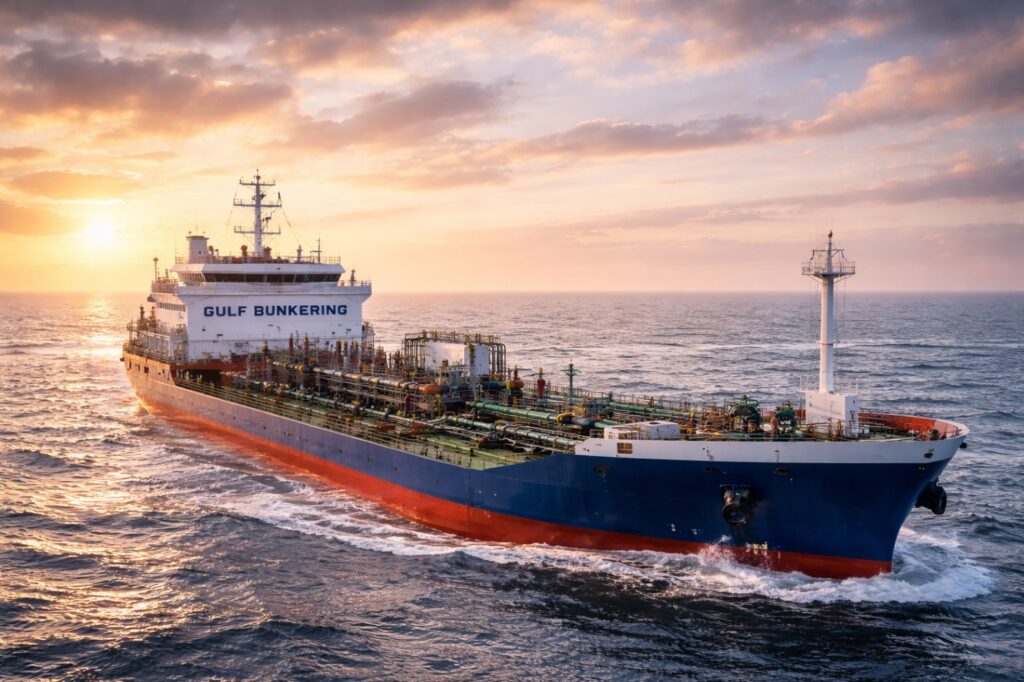
US military forces disabled a tanker heading toward Iran on Wednesday, marking the first strike since Washington reinstated its naval blockade on vessels moving in and out of Iranian ports, according to Ship & Bunker.
The US Central Command (CENTCOM) said in a social media post that the Curacao-flagged, unladen tanker M/T Belma was disabled while transiting international waters en route to Kharg Island. CENTCOM stated that the vessel “ignored multiple warnings as it attempted to violate the U.S. blockade,” and that a US aircraft fired Hellfire missiles into the ship’s smokestack, disabling it. The vessel is no longer heading to Iran, CENTCOM confirmed.
According to Ship & Bunker, CENTCOM also said it redirected two additional vessels that were either arriving at or departing from Iranian ports during the same operation.
Blockade Reinstated by Presidential Order
The naval blockade resumed at 4 PM ET on Tuesday following an order from President Donald Trump, Ship & Bunker reports. This is not the first time such measures have been enforced this year. A previous blockade was in place from April 13 to June 18 before being lifted after the US and Iran signed a memorandum of understanding establishing a framework aimed at ending the conflict.
During that earlier blockade period, US forces struck nine ships connected to Iran, according to Ship & Bunker.
Does This Matter to You?
The resumption of a US naval blockade targeting vessels connected to Iranian ports, combined with an active military strike on a tanker, signals renewed disruption risk in a region critical to global energy shipping. Vessels transiting toward or from Iranian ports, including Kharg Island, a major oil export terminal, now face direct enforcement action if they attempt to breach the blockade.
This development is relevant to parties involved in voyage planning, chartering, or risk assessment for routes touching Iranian waters or nearby international shipping lanes. The precedent set during the earlier blockade, nine vessels struck between April and June, indicates that enforcement has been sustained rather than symbolic. Insurance, compliance, and sanctions-screening considerations may also be affected given the military’s willingness to act against vessels deemed to be violating the blockade.
The source material does not provide detail on broader market impact, freight rates, or insurance responses, and Ship & Bunker’s report does not speculate on these outcomes.
Gulf Bunkering does not provide operational or security guidance. This article is for informational purposes only. Operators should consult flag state authorities, P&I clubs, and relevant advisories for decisions relating to transit planning.
Sources: Ship & Bunker