
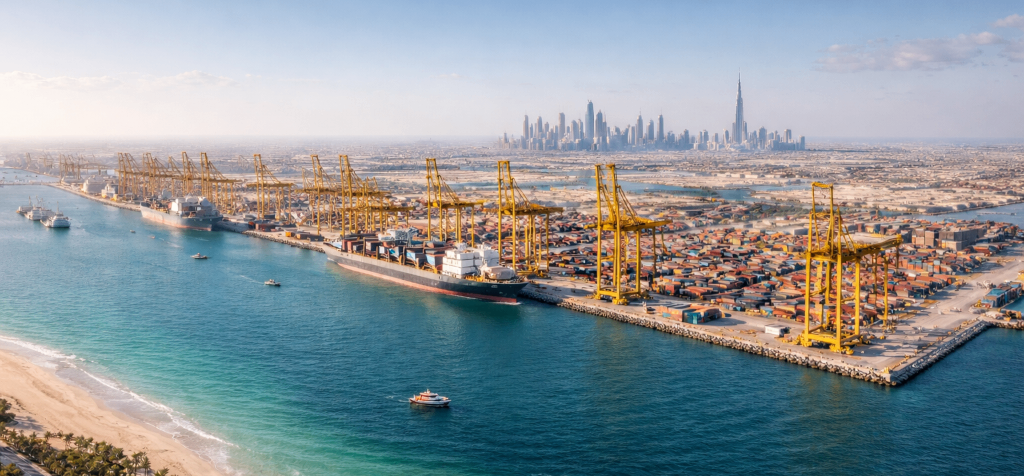
Jebel Ali Port, Dubai, UAE
If you are looking to buy bunker fuel at Jebel Ali Port, Dubai, UAE, you are likely planning fuel sourcing […]
If you are looking to buy bunker fuel at Jebel Ali Port, Dubai, UAE, you are likely planning fuel sourcing […]
Gulf Bunkering provides independent market insight related to marine fuel availability across the Persian Gulf, including major bunkering hubs such
Gulf Bunkering offers independent insight into marine fuel grades, regional market dynamics, and port-level considerations across Oman’s main bunkering locations.
Gulf Bunkering provides independent market insight related to marine fuel availability and regional considerations at Port Sultan Qaboos. The platform
Gulf Bunkering provides independent market insight related to marine fuel availability and regional considerations at Port of Salalah. The platform
The Port of Duqm stands as one of Oman’s most strategically positioned maritime facilities, offering comprehensive bunker fuel supply and
Sohar Port represents one of the Middle East’s fastest-growing bunkering hubs, strategically positioned on Oman’s Gulf coast to serve vessels
Gulf Bunkering provides independent market insight related to marine fuel availability and regional considerations at Jubail Commercial Port. The platform
Jazan Port represents Saudi Arabia’s third-largest maritime facility, providing comprehensive bunkering service solutions to commercial vessels, offshore operators, and specialized
Regional Port Insight Supporting Marine Fuel Activity in the Middle East
Gulf-Bunkering provides region-focused insight into bunkering conditions, port procedures, and operational considerations at key ports across the Middle East, including the Persian Gulf and surrounding areas.
The platform is designed to support informed bunker activity by improving understanding of how local port conditions, regulatory frameworks, and operational practices influence marine fuel supply and procurement.
Bunkering outcomes are often shaped as much by local port conditions as by market pricing.
Regulations, anchorage practices, documentation requirements, berth availability, and coordination procedures vary significantly between ports — even within the same region.
For both vessel operators and market participants active in marine fuel supply, limited visibility into local conditions can result in:
Gulf-Bunkering provides port-level context to help reduce this friction before commercial engagement takes place.
Each port page focuses on practical, non-commercial information relevant to marine fuel activity, including:
This information is commonly used as preparatory context ahead of direct discussions between vessel operators and bunker suppliers.