
If you are looking to buy bunker fuel at Jebel Ali Port, Dubai, UAE, you are likely planning fuel sourcing and requesting quotes based on fuel type, quantity, delivery timing, and port-specific operating conditions.
At Gulf Bunkering, we provide port-specific market context that supports bunker buying and quote requests at Jebel Ali Port. We focus on how fuel sourcing is typically approached at this port, including commonly referenced fuel categories, delivery arrangements, and practical factors that influence planning and execution.
Bunkering at Jebel Ali Port follows local port procedures and operating practices that should be considered as part of fuel sourcing and quote preparation. Understanding these factors helps ensure that enquiries are aligned with how bunkering is normally carried out at this location.
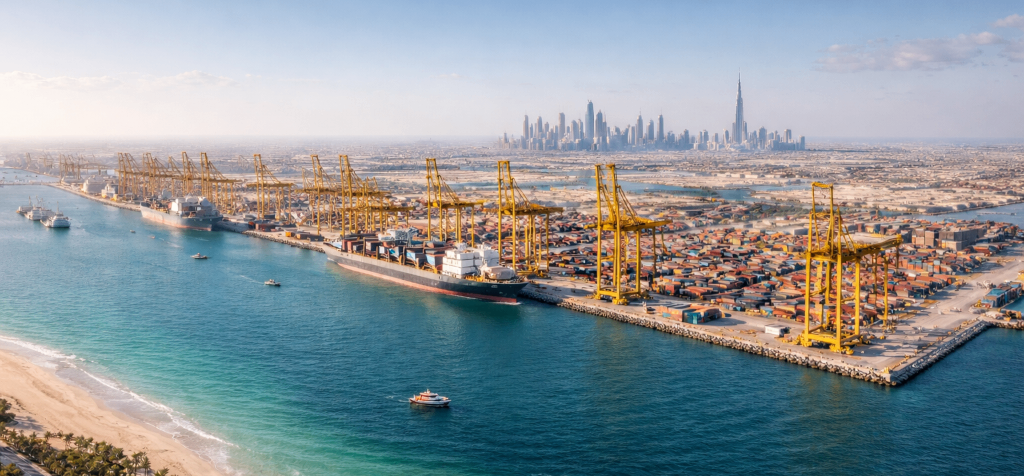
Bunkering activity at Jebel Ali Port
Jebel Ali Port is one of the largest and busiest bunkering hubs in the Middle East and serves as a major refueling point for vessels operating in the Arabian Gulf, Indian Ocean, and on routes between Asia, Europe, and Africa. Fuel is sourced here as part of routine voyage planning, port calls, offshore operations, and regional and international trading patterns.
Bunkering at this port is typically associated with:
- Container vessels calling at one of the world’s largest container terminals
- Bulk carriers and general cargo vessels serving regional and international routes
- Tankers including crude oil and product tankers
- Offshore support vessels serving the regional oil and gas industry
- Cruise ships and passenger vessels
- Naval and government vessels
- Feeder vessels operating within the Gulf region
The specific approach to bunkering depends on berth assignment, vessel profile, and the commercial arrangements made directly with suppliers.

Fuel sourcing and quote guidelines
When requesting bunker fuel quotes for Jebel Ali Port, suppliers typically expect clear information covering both commercial and operational parameters.
A standard bunker enquiry often includes:
- Fuel type and grade
- Requested quantity in metric tonnes
- Delivery date and time window
- Vessel details and berth or anchorage information
- Preferred delivery method where applicable
- Any specification or compliance considerations
Fuel grades, specifications, quantities, pricing, and acceptance criteria are agreed directly between buyers and suppliers as part of the quotation process.
How bunkering is typically arranged at Jebel Ali Port
Bunkering at Jebel Ali Port is arranged through suppliers and service providers operating in the port area, based on the vessel’s schedule and port approvals. The port has well-established bunkering infrastructure and multiple licensed suppliers.
Common delivery arrangements include:
- Barge-to-ship delivery via licensed operators (most common method)
- Truck-to-ship delivery at approved berths for smaller quantities
- Ex-wharf delivery at designated bunkering berths
- Deliveries aligned with confirmed berth or anchorage windows
Delivery method, notice period (typically 24-48 hours), and minimum quantities depend on port rules, berth access, supplier capability, and vessel requirements. Jebel Ali Port operates 24/7, allowing flexible bunkering operations.
Vessel and operational considerations
Jebel Ali Port accommodates vessels of all sizes, including:
- Ultra Large Container Vessels (ULCV) up to 24,000+ TEU
- Capesize and Panamax bulk carriers
- VLCCs and Suezmax tankers
- Offshore supply vessels and tugs
- Cruise ships up to the largest in operation
- Feeder vessels and coastal traders
The port features deep-water berths with drafts up to 17 meters alongside, and the approach channel accommodates vessels with drafts up to 16 meters. Port layout and berth configuration should be reviewed during planning to ensure alignment with the vessel’s characteristics and bunkering requirements.
Regulatory and procedural guidelines
Jebel Ali Port operates outside designated emission control areas. Vessels bunkering here typically comply with the IMO global sulphur limit of 0.50% m/m for fuel oil, unless using alternative compliance methods such as exhaust gas cleaning systems (scrubbers).
Port-level procedures may involve:
- Pilotage is compulsory for most commercial vessels
- Tug requirements depending on vessel size and berth location
- Use of local agents for coordination and approvals (mandatory in UAE)
- Documentation and notification requirements defined by Dubai Ports, Customs & Free Zone Corporation and UAE maritime authorities
- Advance notification for bunkering operations to port control
- Compliance with ISPS Code and port security regulations
These elements form part of the standard bunkering and port call process.
Weather and operating conditions
Weather conditions at Jebel Ali Port are generally favorable for bunkering operations year-round. The port benefits from:
- Sheltered location providing protection from prevailing winds
- Hot, arid climate with minimal rainfall
- Summer temperatures (May-September) reaching 40°C+ with high humidity
- Cooler winter months (November-March) with temperatures 15-25°C
- Occasional shamal winds (strong northwesterly winds) particularly in summer and winter transition periods
- Rare fog conditions that may temporarily affect operations
While bunkering is conducted year-round with minimal weather-related disruptions, operational planning should account for extreme heat during summer months and occasional strong winds when defining delivery windows and scheduling fuel operations.
Fuel types and specifications referenced at this port
Fuel sourcing at Jebel Ali Port commonly involves the following categories, subject to supplier availability and commercial agreement:
- Marine Gas Oil (MGO) – DMA grade
- Marine Diesel Oil (MDO)
- Very Low Sulphur Fuel Oil (VLSFO) – 0.50% max sulphur
- Low Sulphur Fuel Oil (LSFO) – 0.50% max sulphur
- High Sulphur Fuel Oil (HSFO) – 3.50% sulphur (for vessels with scrubbers)
- Lubricating oils and greases
- Biofuel blends on a case-specific basis (emerging availability)
Jebel Ali benefits from proximity to major refineries in the UAE, ensuring consistent fuel availability and quality. Specification details are agreed directly between buyers and suppliers during the quotation process, typically following ISO 8217 standards.
How to use Gulf Bunkering
Maritime professionals use Gulf Bunkering in connection with bunker buying at Jebel Ali Port to:
- Access port-specific context before requesting quotes
- Understand how fuel sourcing is typically approached at this port
- Prepare structured and realistic bunker enquiries
- Connect with market participants active in the area
Contact
If you are planning bunker buying at Jebel Ali Port, Dubai, UAE and want additional guidelines related to fuel sourcing and quote requests, you can contact Gulf Bunkering at contact@gulf-bunkering.com for further information.
*Disclaimer: All information is provided for general informational and decision-support purposes only. Gulf Bunkering does not trade, supply, coordinate, or execute bunkering operations. All commercial and operational activities take place directly between the involved parties.