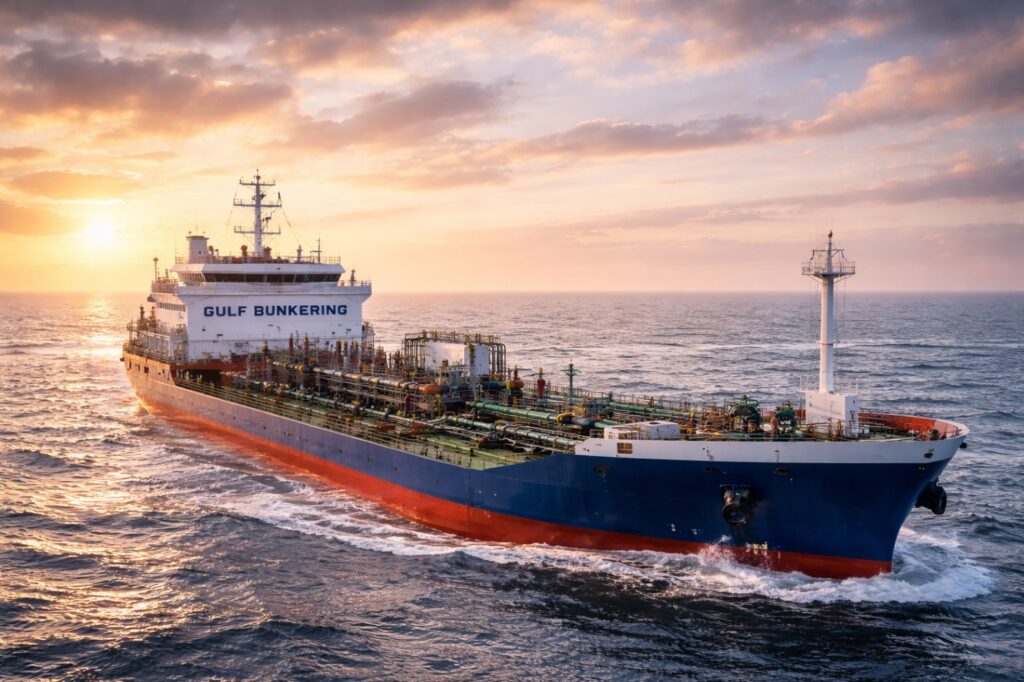
A landmark decision from the International Maritime Organisation’s Marine Environment Protection Committee meeting in London has cleared the way for a new Emission Control Area spanning the North East Atlantic Ocean — one that will become the largest ECA in the world when it takes effect.
According to a detailed analysis published by VPS on Ship & Bunker, the MEPC 84 meeting resulted in adopted amendments to MARPOL Annex VI formally approving the new zone. Implementation is set for 1 September 2027, with full compliance requirements entering force on 1 September 2028.
## What the New ECA Covers
The North East Atlantic ECA will encompass the territorial seas and exclusive economic zones of Greenland, Iceland, the Faroe Islands, Ireland, the United Kingdom, France, Spain, and Portugal — extending up to 200 nautical miles from their respective baselines.
As VPS reports, a key benefit of this designation is that it effectively closes the regulatory gap between the existing North Sea, Baltic Sea, and Mediterranean ECAs, creating what the analysis describes as an almost continuous zone of reduced shipping emissions across European waters. It will also link up with the recently approved ECAs in the Canadian Arctic and Norwegian Sea, scheduled for implementation in 2026 and 2027, respectively. Together, VPS notes, these zones will cover nearly half of all Arctic coastal waters.
The new ECA targets multiple pollutants — sulphur oxides (SOx), nitrogen oxides (NOx), and particulate matter (PM) — with the sulphur cap dropping sharply from 0.50% to 0.10% within the zone.
## A Significant Shift in Fuel Demand
VPS draws a direct comparison to the Mediterranean ECA, which came into force in May 2025, to illustrate the scale of change operators can expect. According to the report, the Mediterranean’s fuel mix shifted dramatically upon ECA implementation:
– VLSFO usage fell by approximately 23%
– MGO consumption more than doubled, rising by 107%
– ULSFO and biofuel supply increased roughly fourfold
VPS warns that a comparable — or potentially more pronounced — transition is likely when the NE Atlantic ECA takes effect, given the scale of the new zone.
## Fuel Quality Concerns
The Mediterranean experience also revealed notable fuel quality challenges, which VPS flags as a serious concern for the NE Atlantic transition. According to the report, off-specification rates for ULSFO in the Mediterranean climbed from 2% to 20% following ECA entry into force — a tenfold increase — with pour point, sulphur content, total sediment potential (TSP), CCAI, water, and viscosity among the key parameters affected. MGO off-specification rates also rose to 4%.
VPS emphasises that this underscores the continuing need for proactive fuel testing to protect vessels, crew, and the marine environment.
## Compliance Complexity Across Regulatory Frameworks
Beyond fuel quality, VPS highlights the layered compliance demands the new ECA introduces. For vessel newbuilds, NOx Tier III requirements will apply, with compliance requiring demonstrated performance of exhaust after-treatment systems — such as Selective Catalytic Reduction (SCR) or Exhaust Gas Recirculation (EGR) — throughout a vessel’s service life, not merely at delivery.
The report also notes that vessels operating under overlapping regulatory frameworks — including the NE Atlantic ECA, EU MRV, EU ETS, and FuelEU Maritime — face increasingly complex emissions data and reporting requirements. VPS references DNV’s MEPC 84 technical update, which confirmed that the newly adopted IMO measurement guidelines can be applied to determining actual methane and nitrous oxide emissions under EU ETS and FuelEU Maritime, providing a direct pathway from IMO-recognised measurement to EU compliance reporting.
At the operational level, VPS notes that voyage segmentation, fuel changeover management, charterparty allocation of ECA fuel cost premiums, and bunker procurement planning will all require careful attention ahead of the September 2028 compliance date.
—
Gulf Bunkering does not provide operational or security guidance. This article is for informational purposes only. Operators should consult flag state authorities, P&I clubs, and relevant advisories for decisions relating to transit planning.
Sources: Ship & Bunker (VPS)