
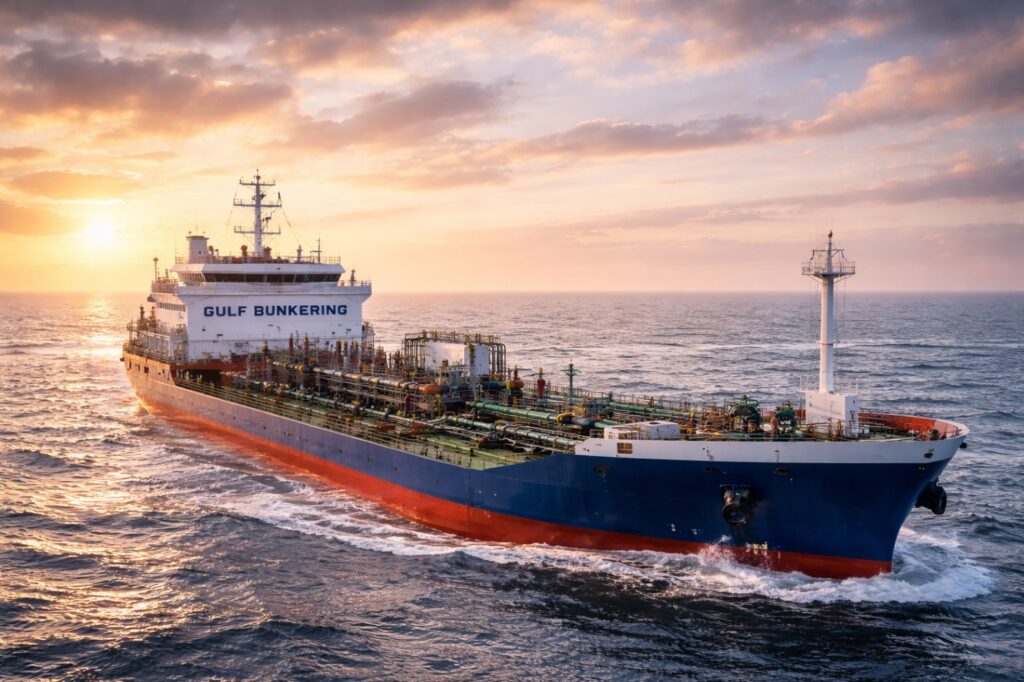
Iran has closed parts of the Strait of Hormuz for several hours today as the Islamic Revolutionary Guard Corps (IRGC) conducts live-fire naval exercises in the waterway. The closure was announced by Iranian state media citing “safety and navigation principles” and coincides with the second round of indirect US–Iran nuclear talks in Geneva.
The drills — officially named “Smart Control of the Strait of Hormuz” — began on Monday and involve live missile firing. This marks the first time Iran has formally closed sections of the strait since the June 2025 conflict with Israel.
What Is Happening in the Strait Today
The IRGC announced the exercise on Monday. On Tuesday, parts of the main transit corridor were closed for the duration of the live-fire phase. Iranian state television stated that “the main transit routes of the Strait of Hormuz are under the control of the IRGC Navy, and Iran has no red lines when it comes to safeguarding security in this region.”
The closure is described as temporary and limited in scope. Iranian authorities have not specified which sections are affected or the precise timeframe beyond “several hours.”
Brent crude reversed earlier losses on the news, trading approximately 0.1% higher at $68.74 per barrel as of Tuesday morning London time.

Why the Strait Matters to Gulf Shipping
Roughly 20 million barrels of oil per day pass through the Strait of Hormuz — approximately 20 to 30 per cent of global daily oil consumption. The strait is the primary export route for Saudi Arabia, Iraq, Iran, Kuwait, the UAE, and Qatar. LNG exports from Qatar also transit the waterway, accounting for around 22 per cent of global LNG trade.
“There is no alternative route to the Strait of Hormuz,” Jakob Larsen, chief safety and security officer at Bimco, said earlier this week. Only Saudi Arabia and the UAE have operating pipeline capacity that can partially bypass the strait — the East-West Pipeline to Yanbu on the Red Sea, and the UAE’s Habshan–Fujairah pipeline to the Gulf of Oman — but neither has sufficient capacity to absorb a meaningful share of overall Gulf export volumes.
The Broader Context
Today’s partial closure takes place against a deteriorating security backdrop in the region. The US has been increasing its naval presence in the Gulf over the past two weeks. The USS Abraham Lincoln carrier strike group has been deployed in the region, and the USS Gerald R. Ford — the world’s largest aircraft carrier — has been ordered from the Caribbean to join it.
Last week, US forces shot down an Iranian drone that approached the Lincoln. On the same day, Iranian vessels attempted to stop a US-flagged commercial ship transiting the strait. A US Maritime Administration advisory issued earlier this month notes that commercial vessels in the strait and Gulf of Oman have faced boarding attempts by Iranian forces, most recently on 3 February 2026.
Iran’s Supreme Leader Ayatollah Ali Khamenei issued fresh warnings on Tuesday, stating that “a warship is a dangerous apparatus, but more dangerous than the warship is the weapon that can sink the warship into the depths of the sea.” He also cautioned Washington against attempting to dictate the terms of the Geneva talks.
Nuclear Talks in Geneva
The timing of the drills alongside the Geneva negotiations has attracted significant attention. The second round of indirect US–Iran talks on Iran’s nuclear programme began on Tuesday. The Trump administration is seeking limits on Iran’s uranium enrichment and access to Iran’s nuclear stockpile. Iran has resisted demands to halt enrichment and has not agreed to surrender its current uranium supply. Both sides described the first round of talks, held on 16 February, as constructive.
Gulf Arab nations have warned publicly that any military escalation risks triggering a wider regional conflict.
Implications for Vessels Operating in the Region
The closure today is described as temporary and tied to the drill schedule. However, the combination of live-fire exercises, increased US naval deployments, and ongoing nuclear negotiations introduces elevated uncertainty for voyage planning through the strait and the broader Gulf of Oman corridor.
Operators and charterers planning transits in the coming days should monitor UKMTO advisories and Maritime Administration notices closely. The US Fifth Fleet Battle Watch and UKMTO remain the primary contacts for vessel security reporting in the region.
Gulf Bunkering does not provide operational or security guidance. This article is for informational purposes only. Operators should consult flag state authorities, P&I clubs, and relevant advisories for decisions relating to transit planning.
Sources: Reuters (via Yahoo News), Bloomberg (via Swiss Info)