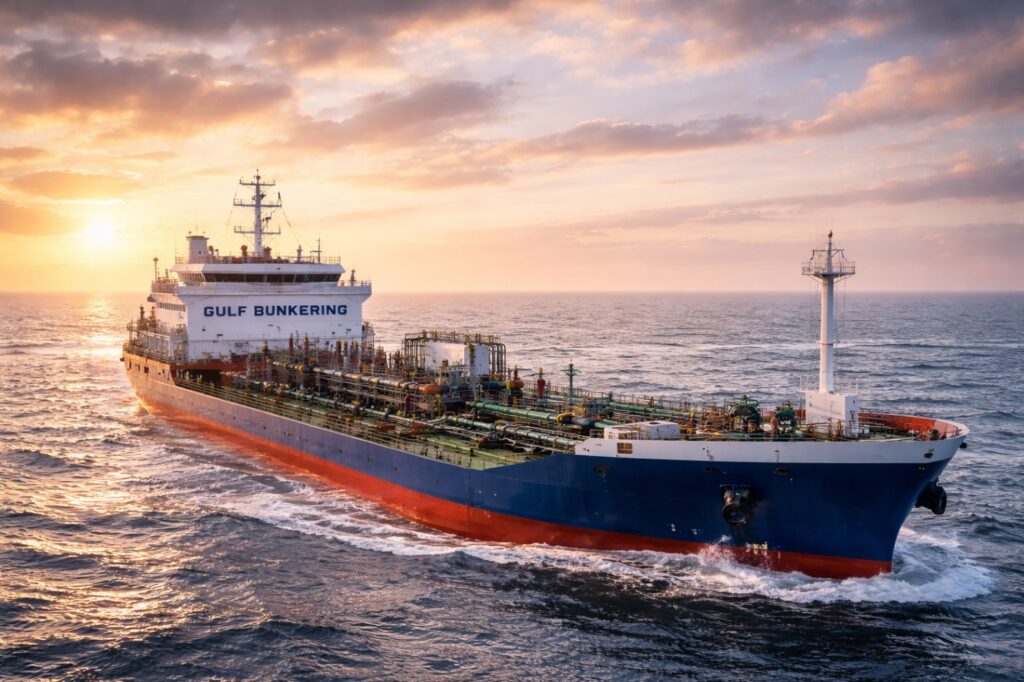
Bunker industry body IBIA has had its shipboard biofuel blend checklist for FAME-based fuels formally issued by the International Maritime Organization (IMO), appearing as an annex to document MEPC 85/INF.10, according to Ship & Bunker. The submission places the guidance before IMO member states ahead of the Marine Environment Protection Committee’s 85th session, scheduled to run from November 30 to December 3.
A Checklist for First-Time Blend Users
According to Ship & Bunker, the checklist was drawn up by the IBIA Technical Working Group as part of an ongoing revision of the IBIA/BIMCO Shipmaster’s Bunkering Manual. IBIA said in a statement cited by the outlet that the tool is designed to support vessel operators with the practical realities of bunkering and burning biofuel blends, particularly those doing so for the first time.
In its September 3 submission to the IMO, IBIA noted that wider use of biofuel blends introduces operational risks that differ from, or add to, those associated with conventional fuels. The organization said these risks can be managed through disciplined fuel handling practices both before delivery and after the fuel is onboard, Ship & Bunker reports.
What the Checklist Covers
The nine-section document spans the bunkering process from OEM sign-off prior to ordering through to monitoring for filter clogging during the initial weeks of use, as described by Ship & Bunker. It is built on CIMAC guideline 04|2024 covering marine fuels containing FAME, and IBIA has advised that operators handling bio-based fuels outside the FAME category consult their engine manufacturer and the vessel’s recognised organisation separately.
Among the specific measures outlined, the checklist calls for bunker tanks to be stripped before a blend is loaded for the first time, and warns that blends can dislodge existing deposits within tanks and fuel systems, potentially raising filter loading during early use. It also recommends retesting fuel quality if a blend has been in storage longer than six months, and instructs crews to verify blend ratios and sustainability documentation against the bunker delivery note before accepting fuel. Voyage fuel planning should account for the lower energy content typical of blended fuels, the checklist states, per Ship & Bunker’s reporting.
The outlet also referenced earlier coverage noting that the Global Centre for Maritime Decarbonisation (GCMD) has flagged that blend ratios such as B24 or B30 are generally declared by suppliers rather than independently verified.
Softening Demand Backdrop
Ship & Bunker reports that the guidance lands as biofuel blends remain part of the marine fuel mix, though recent uptake has cooled. Citing data from the Maritime and Port Authority of Singapore (MPA), the outlet noted that blend sales at Singapore, the world’s largest bunkering hub, reached 519,820 mt over the first eight months of 2026, roughly half the 1.04 million mt sold over the same period the prior year.
Does This Matter to You?
Operators bunkering FAME blends for the first time, along with fuel testing providers and vessel technical managers, may find the checklist relevant to onboard fuel handling procedures and pre-delivery documentation checks. As the source material outlines, verifying blend ratios and sustainability paperwork against the bunker delivery note, alongside adjusted voyage planning for lower-energy blends, are practical steps directly tied to compliance and operational risk management highlighted in IBIA’s submission to the IMO.
Gulf Bunkering does not provide operational or security guidance. This article is for informational purposes only. Operators should consult flag state authorities, P&I clubs, and relevant advisories for decisions relating to transit planning.
Sources: Ship & Bunker