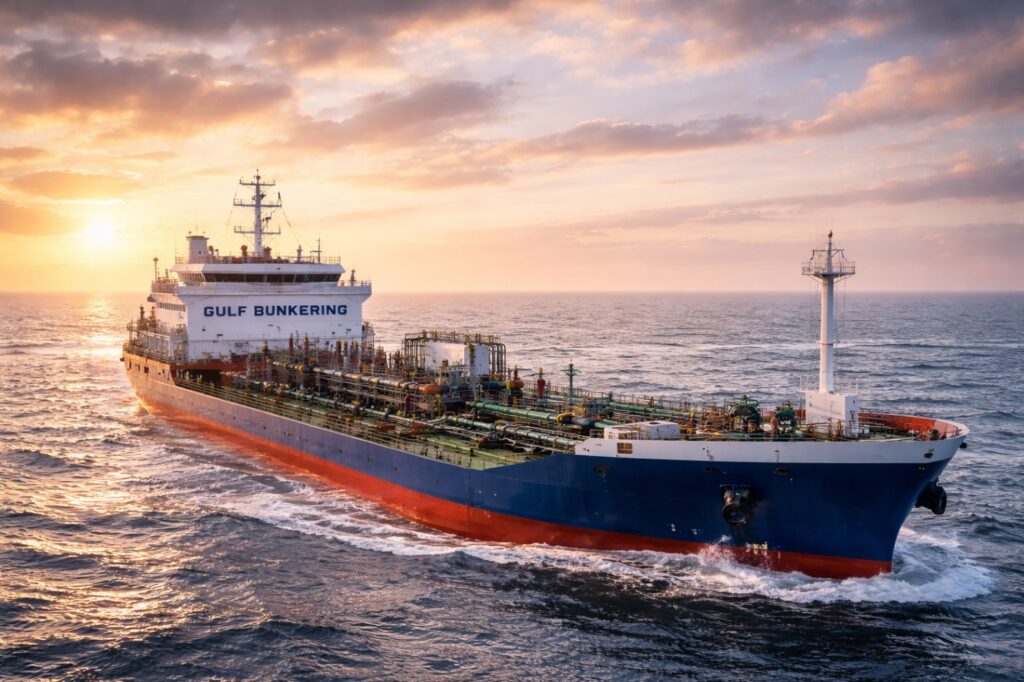
Oil markets reacted sharply on Monday morning after the United States and Iran announced a preliminary framework agreement that would pave the way for reopening the Strait of Hormuz, according to Ship & Bunker.
The ICE August Brent contract dropped 4.5% to $83.37 per barrel as of early London trading, down from Friday’s settlement of $87.33 per barrel, as reported by Ship & Bunker.
Trump Announces Deal, Iran Confirms MoU
US President Donald Trump announced the agreement via social media, stating: “The Deal with the Islamic Republic of Iran is now complete.” He added that he was authorising “the toll-free opening of the Strait of Hormuz” and the “immediate removal of the United States Naval blockade,” urging ships worldwide to resume movement.
Iran’s Deputy Foreign Minister Kazem Gharibabadi confirmed to Ship & Bunker that the text of a memorandum of understanding has been finalised, with a formal signing ceremony scheduled for Friday in Switzerland.
Over 100 Days of Disruption
The Strait of Hormuz has been closed to commercial shipping for more than 100 days, according to Ship & Bunker, following military action against Iran by the US and Israel in late February. The waterway is one of the world’s most critical maritime chokepoints for energy flows.
The full terms of the memorandum have not yet been made public. Details related to Iran’s nuclear programme and other key issues are expected to be disclosed once the document is formally signed on Friday, as reported by Ship & Bunker.
Ships Positioned and Waiting
Daniel Hynes, senior commodity strategist at ANZ Bank, noted in a LinkedIn post cited by Ship & Bunker that “dozens of ships are positioned near the Strait of Hormuz ready to move if traffic resumes.” However, Hynes cautioned that “the oil market wouldn’t see any relief on production in the region until empty ships return.”
Does This Matter to You?
The potential reopening of the Strait of Hormuz carries significant weight for maritime commerce. The waterway is a critical passage for a large share of global oil and liquefied natural gas shipments. A prolonged closure of more than 100 days has constrained vessel routing, altered tanker deployment patterns, and introduced pricing volatility across energy markets.
With dozens of vessels reportedly staged near the strait and awaiting resumption of transit, any formalisation of the agreement on Friday could trigger rapid shifts in vessel positioning, freight rates, and bunker demand across key refuelling hubs in the region. The situation remains fluid until the MoU is formally signed and its terms are made public.
Gulf Bunkering does not provide operational or security guidance. This article is for informational purposes only. Operators should consult flag state authorities, P&I clubs, and relevant advisories for decisions relating to transit planning.
Sources: Ship & Bunker