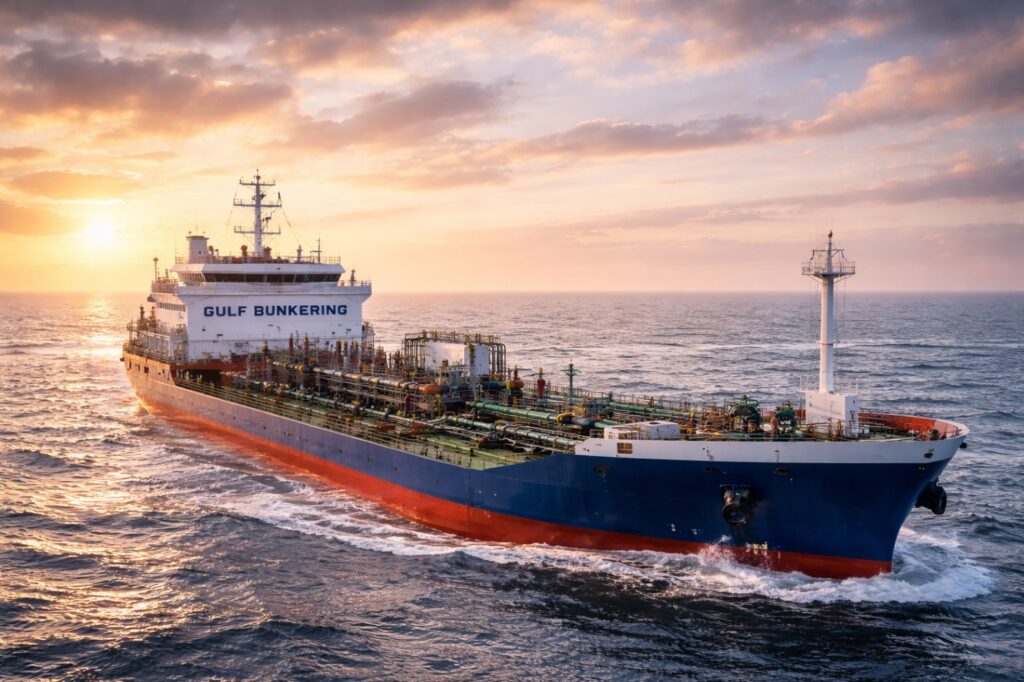
Freight rates for the world’s largest crude oil tankers have climbed to historically high levels, driven largely by disruptions linked to tensions in the Middle East, according to ShippingWatch.
According to ShippingWatch, very large crude carriers (VLCCs) are currently seeing some of the strongest rates on record. The publication reports that the surge is partly a consequence of tensions surrounding the Strait of Hormuz, a critical chokepoint for global oil shipments.
Fearnley Analyst Expects Trend to Continue
ShippingWatch reports that an analyst from Fearnley expects the elevated rate environment for VLCCs to persist rather than prove temporary. The analyst also anticipates that the effects will not remain isolated to the largest crude carriers, with the report indicating that the rate strength is expected to spread to smaller product tankers as well, according to ShippingWatch.
The report does not provide specific figures on how high current VLCC rates have climbed or a precise timeline for when product tankers might begin to see similar gains, based on the available source material.
Does This Matter to You?
Sustained record-high VLCC rates, and the potential spread of that strength to product tankers, could have implications across the tanker chartering and trading chain. Vessel owners and operators tracking freight market conditions, as well as charterers and traders monitoring costs tied to crude and product movements through or near the Strait of Hormuz, may find this development relevant to voyage planning and cost forecasting.
The broader context also ties into ongoing regional tensions affecting shipping through the Strait of Hormuz, a route ShippingWatch has separately reported is seeing sharply reduced vessel traffic. The direct operational impact beyond the rate environment described is not detailed further in the available source material.
Gulf Bunkering does not provide operational or security guidance. This article is for informational purposes only. Operators should consult flag state authorities, P&I clubs, and relevant advisories for decisions relating to transit planning.
Sources: ShippingWatch