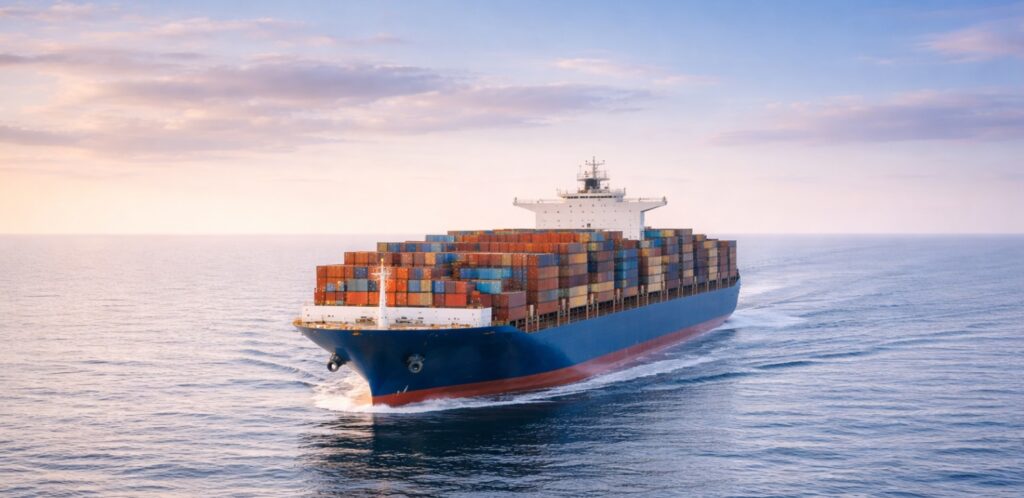
A framework agreement between the United States and Iran may have been signed, but the maritime industry should not expect a swift return to normal operations in the Strait of Hormuz. According to Haider Anjum, Senior Equity Analyst at Jyske Bank, a full normalization of traffic through the strait could take as long as four months.
Mine Clearance and Security the First Hurdles
As reported by ShippingWatch, Anjum outlined in an email interview with MarketWire that physical safety must be established before shipping companies will be willing to return. A key part of this process is verifying that the strait is free of mines — a task he estimates will take between one and a half and two months on its own.
Beyond mine clearance, the analyst stresses that the peace agreement must prove both credible and durable. Any new attacks or political setbacks could reset confidence entirely.
Hundreds of Vessels Currently Stranded
Anjum highlights an immediate logistical challenge: up to 500 vessels are currently stranded inside the strait and must exit before new traffic can enter. Once that backlog clears, shipping lines will need to reestablish services, sailing schedules, and tonnage positioning — a process that takes considerable time.
“Realistically, we estimate that it could take about four months before traffic returns to roughly normal levels,” Anjum told MarketWire, adding that a longer incident-free period will be needed before insurers also reassess their risk exposure.
Limited Direct Container Impact — But Rates Could Feel the Pressure
While the reopening of the Strait of Hormuz will not immediately drive major volume changes for container shipping — given the relatively limited volume of container traffic to the Gulf — the financial implications could still be significant.
According to Anjum, lower fuel costs and reduced insurance premiums are the most immediate direct benefits. However, these savings come with a trade-off: the temporary surcharges that shipping lines introduced to protect earnings will likely need to be removed, placing downward pressure on freight rates.
The Suez Route May Matter More
The more consequential secondary effect, in Anjum’s view, could be the potential reopening of the Suez Canal route via the Red Sea. A return to that corridor would substantially increase effective capacity in the global container market — and accelerate the erosion of the current strong rate environment.
“The timing of normalization will be crucial in determining how quickly the current strong rate momentum is broken,” Anjum noted, also pointing to existing overcapacity in the market as an additional downward force.
Maersk shares were up 0.8% as of Tuesday afternoon, according to ShippingWatch.
Does This Matter to You?
For those monitoring freight rate developments, insurance conditions, or route planning across key trade lanes, this analysis carries meaningful implications. A potential normalization of both the Strait of Hormuz and the Red Sea corridor would reshape capacity dynamics, alter surcharge structures, and shift the risk calculus for vessels operating in or around these regions. The timeline outlined by Jyske Bank suggests these changes will unfold gradually rather than overnight — making close monitoring of political and physical security developments in the region important in the weeks ahead.
Gulf Bunkering does not provide operational or security guidance. This article is for informational purposes only. Operators should consult flag state authorities, P&I clubs, and relevant advisories for decisions relating to transit planning.
Sources: ShippingWatch (via MarketWire)