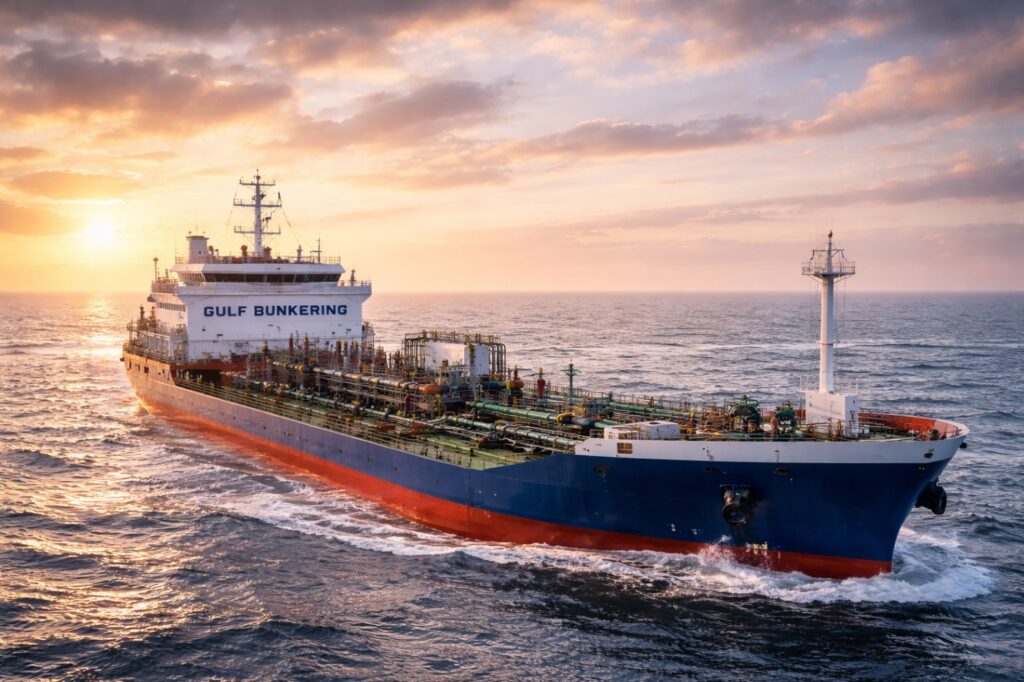
Energy services firm Axpo has reached a new milestone in its Mediterranean bunkering operations, completing its first ship-to-ship bio-LNG bunkering in the port of Barcelona. The fuel was supplied to a vessel operated by Japanese shipping company Mitsui OSK Lines (MOL), according to Ship & Bunker.
The Operation
Axpo’s bunkering vessel Green Pearl delivered bio-LNG to MOL’s vehicle carrier Lapis Ace in what marks a significant step in the rollout of alternative marine fuels across Spanish ports.
Barcelona becomes the third major Spanish port where Axpo has carried out ship-to-ship LNG bunkering operations. The company previously completed similar deliveries in Malaga and Algeciras, as reported by Ship & Bunker.
Part of a Broader Supply Agreement
The Barcelona bunkering follows a marine fuel supply agreement between MOL, Axpo, and Titan, announced the week prior. Under the terms of the deal, Axpo is set to supply bio-LNG to MOL’s LNG-fuelled vehicle carriers across the Mediterranean, with Barcelona and Malaga named as included ports.
Ship & Bunker notes that this builds on a supply partnership between the companies that was first launched in March 2025.
“The refuelling operation with MOL in Barcelona represents another key moment for LNG adoption in Spain,” Daniele Corti, Head of Small-Scale LNG at Axpo, said according to Ship & Bunker.
Does This Matter to You?
This development reflects a growing network of bio-LNG bunkering infrastructure across the western Mediterranean. For those monitoring alternative fuel availability in European ports, the expansion of ship-to-ship bio-LNG operations into Barcelona — following Malaga and Algeciras — points to a gradual widening of supply options for LNG-fuelled tonnage in the region.
Bio-LNG is considered a drop-in fuel for LNG-fuelled vessels, meaning it can be used without modifications to existing fuel systems. As shipping companies navigate evolving emissions regulations, the commercial agreements underpinning this operation — linking energy suppliers, bunkering vessels, and fleet operators — may be of interest to those tracking how alternative fuel supply chains are being structured in practice.
Gulf Bunkering does not provide operational or security guidance. This article is for informational purposes only. Operators should consult flag state authorities, P&I clubs, and relevant advisories for decisions relating to transit planning.
Sources: Ship & Bunker