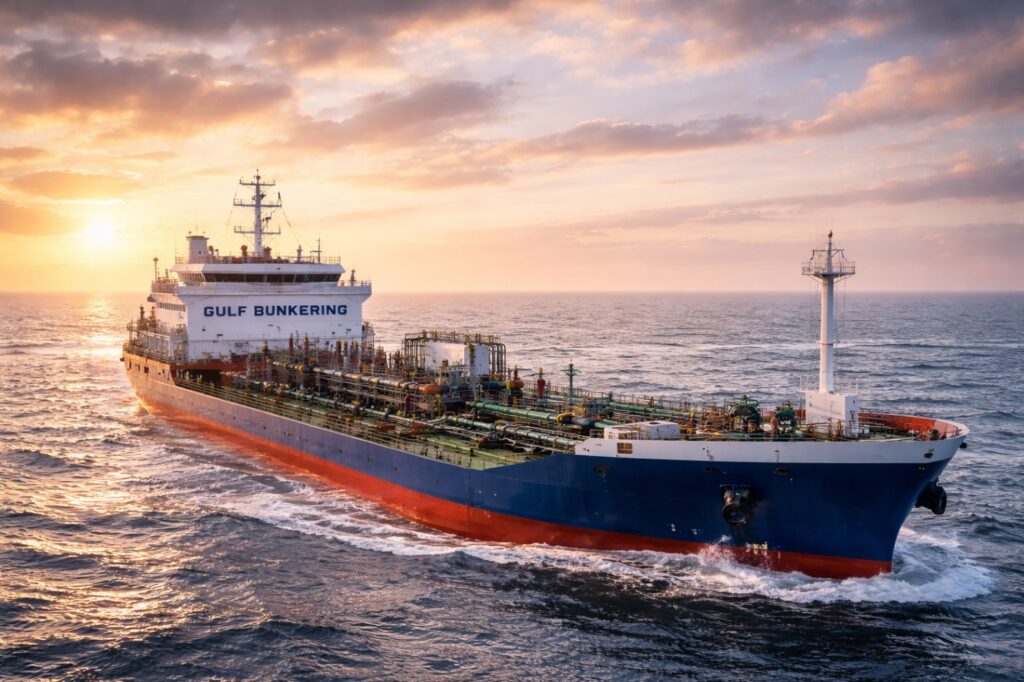
Hapag-Lloyd is moving to pull all of its vessels clear of the Persian Gulf and the Strait of Hormuz, with the German container shipping company expressing optimism that the operation could be completed by this weekend or early next week.
A company spokesperson confirmed the plans directly to ShippingWatch, describing the carrier as hopeful about completing the full exit of its four vessels currently in the region within that timeframe.
Exit Comes Amid Broader Hormuz Developments
The announcement arrives against a backdrop of rapidly shifting conditions around the Strait of Hormuz. According to ShippingWatch, a US-Iran peace deal is set to be signed, with the strait expected to reopen as part of that agreement. An Indian tanker has already transited Hormuz as the first vessel under the new arrangement, the publication reports.
Despite the apparent diplomatic progress, ShippingWatch notes that a return to full normalcy in the region may still take months, even as the reopening draws closer.
A Tense Recent History
The decision to exit follows a period of elevated risk for carriers operating in the area. As reported by ShippingWatch, a Hapag-Lloyd vessel chartered by Maersk was struck by a projectile in the Persian Gulf earlier this year in March, underscoring the dangers that have faced shipping companies transiting the region.
ShippingWatch also reports that other major carriers, including Nippon Yusen and its peers, are actively seeking further details on the Hormuz reopening plans before making decisions about resuming normal operations.
Does This Matter to You?
The Strait of Hormuz is one of the world’s most critical maritime chokepoints, and any movement by a major container carrier to reposition its fleet carries significant implications across the shipping ecosystem. Hapag-Lloyd’s planned exit, combined with reports of a first tanker transit under the new agreement and an imminent US-Iran deal, signals that the situation is evolving quickly.
Schedule reliability, freight routing, port call sequencing, and fuel planning on routes touching the Persian Gulf or wider Middle East corridor may all be affected as the situation continues to develop. The pace at which carriers return to normal operations — and the conditions they require to do so — will be a key variable to watch in the days ahead.
ShippingWatch also reports that carriers are calling for the safe evacuation of seafarers from the region following the peace agreement, pointing to ongoing concerns about crew welfare even as diplomatic developments unfold.
Gulf Bunkering does not provide operational or security guidance. This article is for informational purposes only. Operators should consult flag state authorities, P&I clubs, and relevant advisories for decisions relating to transit planning.
Sources: ShippingWatch